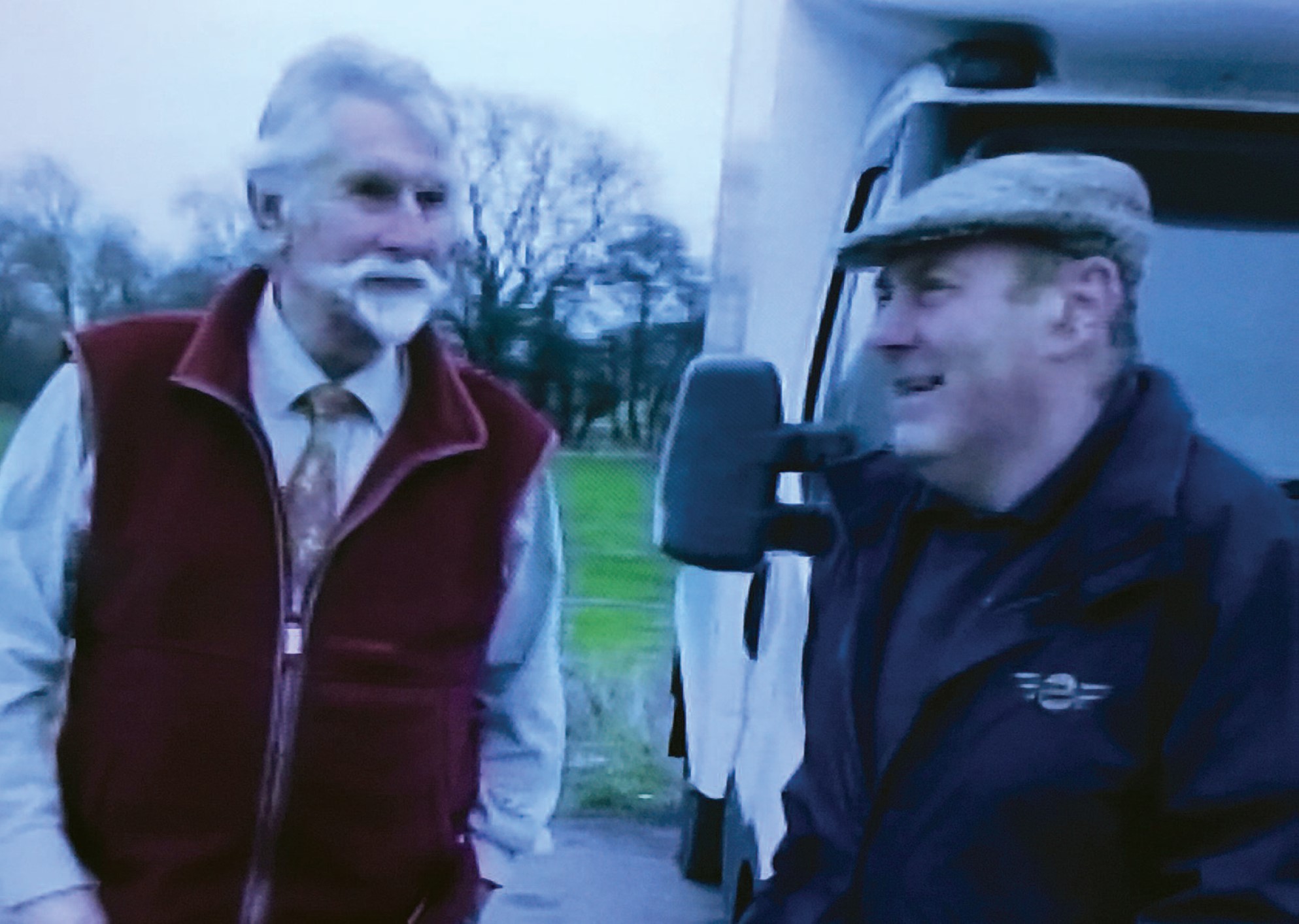
In January 2024,Michael Sargeant, an avid vintage vehicle collector from Wem, Shropshire, suffered a sudden cardiac arrest.
Following heart surgery to replace his aortic valve in 2023, Michael Sargeant decided to prepare for the future by scaling back his classic car and bike collection.
Michael said: “The operation put things into perspective. If I go first, I do not want my partner, Jan, to be left worrying over the sale of classic vehicles.”
With regular medication and a pacemaker fitted, on 12th January2024, he and Jan attended Sleap Airfield near Shrewsbury to film a segment with the TV show, Bangers & Cash. Derek Mathewson, a classic car specialist who features in the show, valued several of Michael’s vehicles.
After filming had wrapped, Michael and Jan made their way across the car park to head home. Michael called over to Jan and then collapsed. As he lay unresponsive, Jan screamed for help and staff from the airfield, including three firefighters, swiftly
arrived with an automated external defibrillator (AED). Michael had gone into cardiac arrest, 999 was called and bystander CPR was initiated by airfield staff. Along with two land ambulances, a pre-hospital emergency medicine doctor and critical care paramedic on-board our Cosford aircraft, G-RMAA, rapidly responded to the scene thanks to the quick actions of the charity’s on duty pilot Captain John Darlow with his local knowledge and liaison with the airfield.
Fortunately, the swift CPR and AED shocks Michael received to his heart triggered a ROSC (return of spontaneous circulation). A ROSC is a significant milestone for a cardiac arrest patient as it means their heart has started beating on its own and can
circulate oxygen around the body again. However, Michael was not completely out of the woods.
Chris Brooke, critical care paramedic who attended the scene, explained: “In the instance of an out-of-hospital cardiac arrest, after a ROSC is achieved, it is vital that patients rapidly receive post resuscitation care.”
Once on scene, Chris, and colleague Dr Joe Tyler, began advanced post ROSC care with medication. They administered advanced drugs, which are not permitted to be administered by land ambulance crews, to ensure the best chance of survival and
good recovery. He was given Ketamine (used to induce and maintain anaesthesia), Metaraminol (a drug which helps support good blood pressure during anaesthesia), and Rocuronium (used as a muscle relaxant during anaesthesia).
These enhanced drugs can only be administered by pre-hospital emergency medicine doctors and critical care paramedics. Our clinicians have undergone advanced training so that they can administer these drugs and interventions outside of a hospital setting, just like in Michael’s case.
Once Michael’s condition was stabilised, he was stretchered onto the air ambulance and a LUCAS (a device which gives CPR compressions mechanically) was applied to his chest just in case he went back into cardiac arrest whilst in flight. He was airlifted
to Royal Stoke University Hospital so he could receive further care. He spent five days in an induced coma and several weeks recovering in hospital before being discharged.
Michael said of his experience: “I do not remember anything about that day at all. The only evidence of that day is watching the footage that was captured by the TV cameras.
“What I do know is that without the airfield staff who responded so quickly and restarted my heart, and without the enhanced care I received on scene from Midlands Air Ambulance Charity, I would not be here today.”