
Support Your
Midlands Air Ambulance Charity

2026 marks a remarkable milestone for Midlands Air Ambulance Charity: 35 years of saving lives across our region.
This anniversary is a moment to pause, reflect, and, above all, feel grateful - for every medical intervention, every life saved, and every person, group, and organisation that has helped keep our helicopters flying and our crews ready to respond.

Over 35 years, our service has evolved: aircraft and technology have advanced, medical capabilities have expanded, and our crews meet ever-growing demands. But what has never changed is the community behind us - the people who support our mission and the patients we serve.
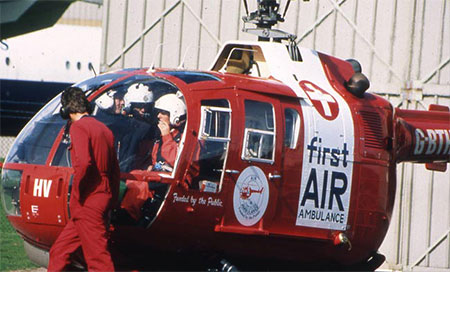
Then: Our early years, operating a Bolkow 105 aircraft, one of the first air ambulance services in the UK, running five days a week.
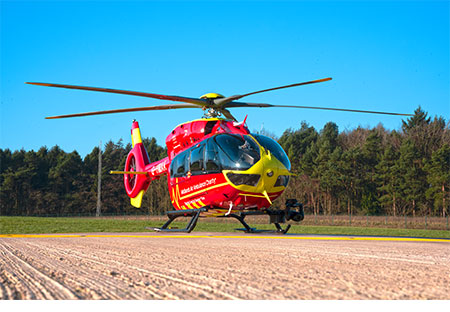
Now: Our third wholly-owned helicopter, the H145 D3 (G-HMAA), joined the fleet in January 2025, alongside an H145 (G-RMAA) and H135 (G-OMAA).
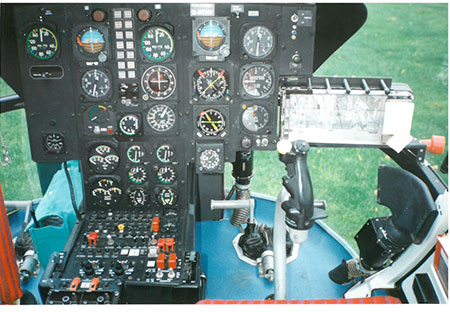
Then: The avionics within the Bolkow 105 were generally basic and traditional. First introduced into service in 1970, the aircraft relied on analogue systems that reflected the technology of the time.
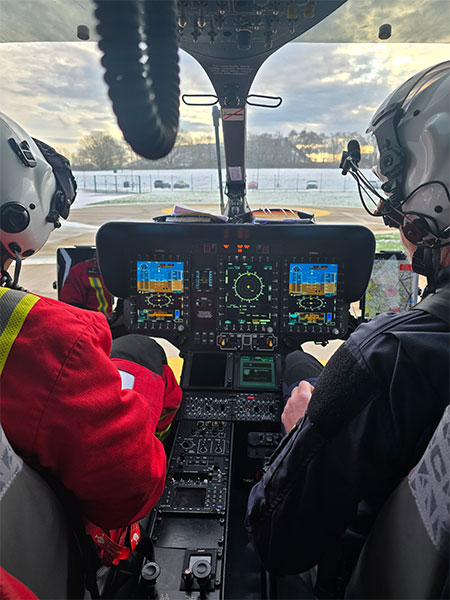
Now: Our H145 helicopters feature fully integrated digital avionics, full FADEC engine control, and a four-axis autopilot — enhancing situational awareness and reducing pilot workload for safer, more efficient flights.
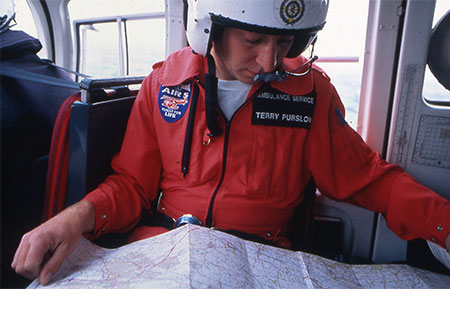
Then: Navigation relied entirely on paper maps - 1:250,000 aviation charts, switching to 1:50,000 Ordnance Survey maps, sometimes supplemented with A–Z street maps.
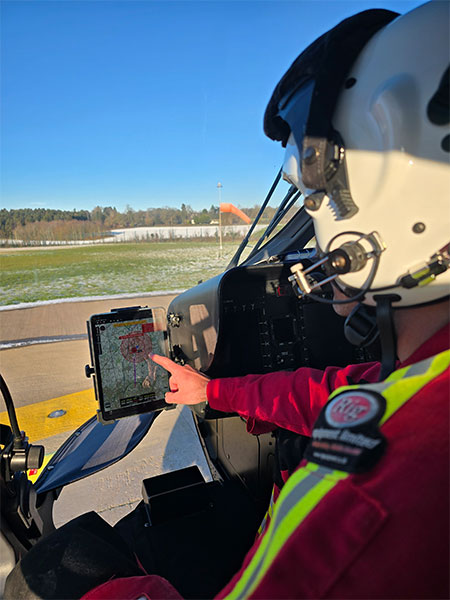
Now: Tablet devices provide moving-map technology, along with vital information such as aviation notices (NOTAMs) and weather data, supporting faster and more accurate decision-making in flight.
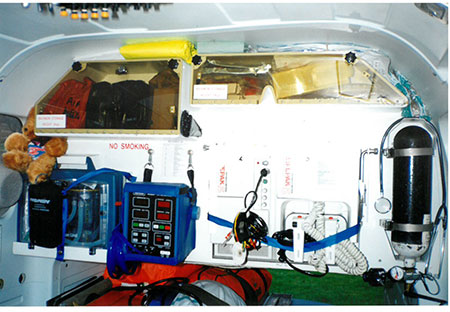
Then: Aircraft interiors carried less medical equipment, with limited space available for patient care. While essential tools were on board, equipment was generally larger, less integrated and designed for more basic levels of treatment.
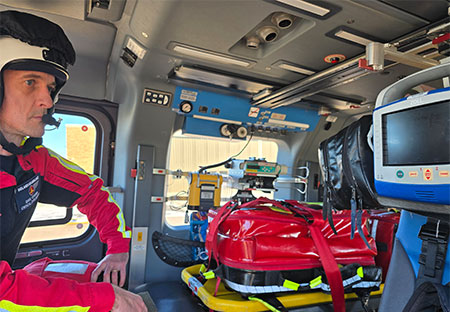
Now: Interiors are designed for enhanced critical care. Compact multifunction Zoll monitors, mechanical CPR devices, transport ventilators, syringe drivers, blood products, surgical equipment, and ultrasound scanners are all on board - while providing more room to care for patients en route. The aircraft’s increased weight and space capacity allows crews to treat more patients before needing to restock or refuel.
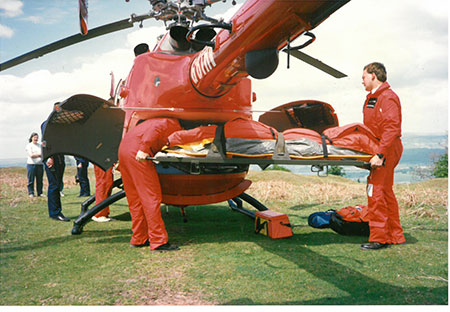
Then: Patients were initially rear loaded, but for a period, side loading was used due to helicopter design.
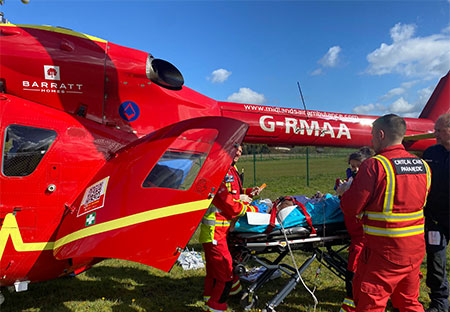
Now: We have returned to rear loading with a roll-on, roll-off stretcher system, improving patient safety and making transfer easier for our crew.
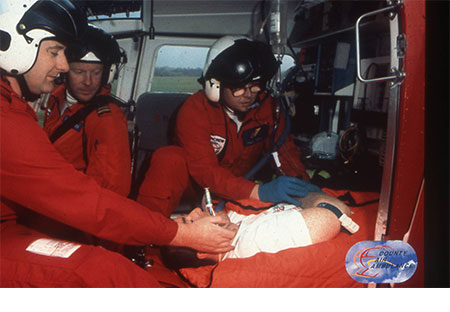
Then: The clinical crew comprised two HEMS paramedics, supported by a pilot.
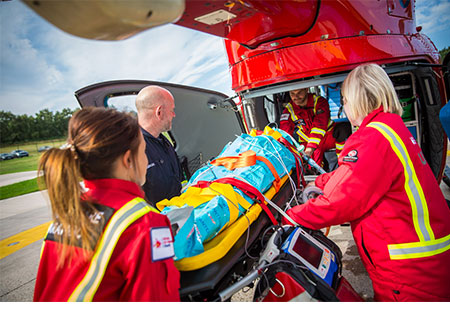
Now: Highly trained pilots now fly with specialist doctors and critical care paramedics, bringing advanced clinical expertise directly to patients.
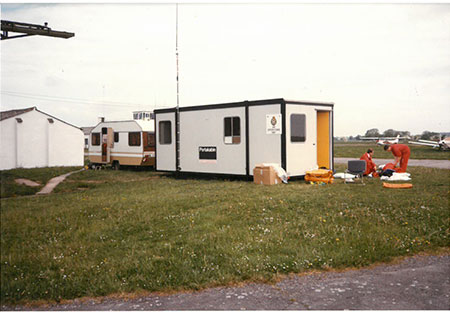
Then: The service operated Monday to Friday, 9am - 5pm, from a caravan at Halfpenny Green Airport (now Wolverhampton Airport), and at night time the helicopter was chained to a tree.
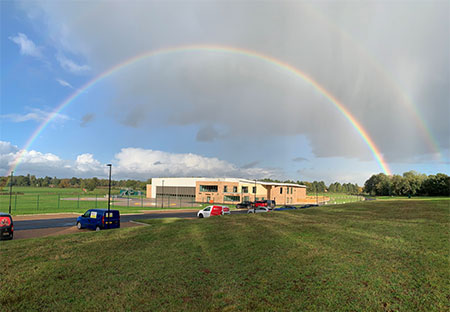
Now: The 24/7 service now operates from three airbases: purpose-built headquarters near Shifnal in Shropshire, the redeveloped Strensham airbase near Tewkesbury on the Gloucestershire/Worcestershire border, and the northern base at Tatenhill near Burton upon Trent. Our Shropshire HQ includes state-of-the-art training facilities, supporting continuous improvement in advanced pre-hospital patient care across the Midlands.
Activity in the community
Open days throughout the Summer as follows:
We invite you to join us in celebrating 35 years. Whether our service has touched your life or someone you love, your stories and messages are a meaningful part of our shared history.
As we reflect on 35 years of saving lives, we do so with gratitude - for our past, our present, and the people who will shape our future.
With your continued support, we remain committed to being there for our region, today and for years to come.
Thank you for being part of our journey.